Start with the roof
Measurements, orientation, pitch, obstructions, shading and drone evidence establish what can genuinely be used.
About Tom
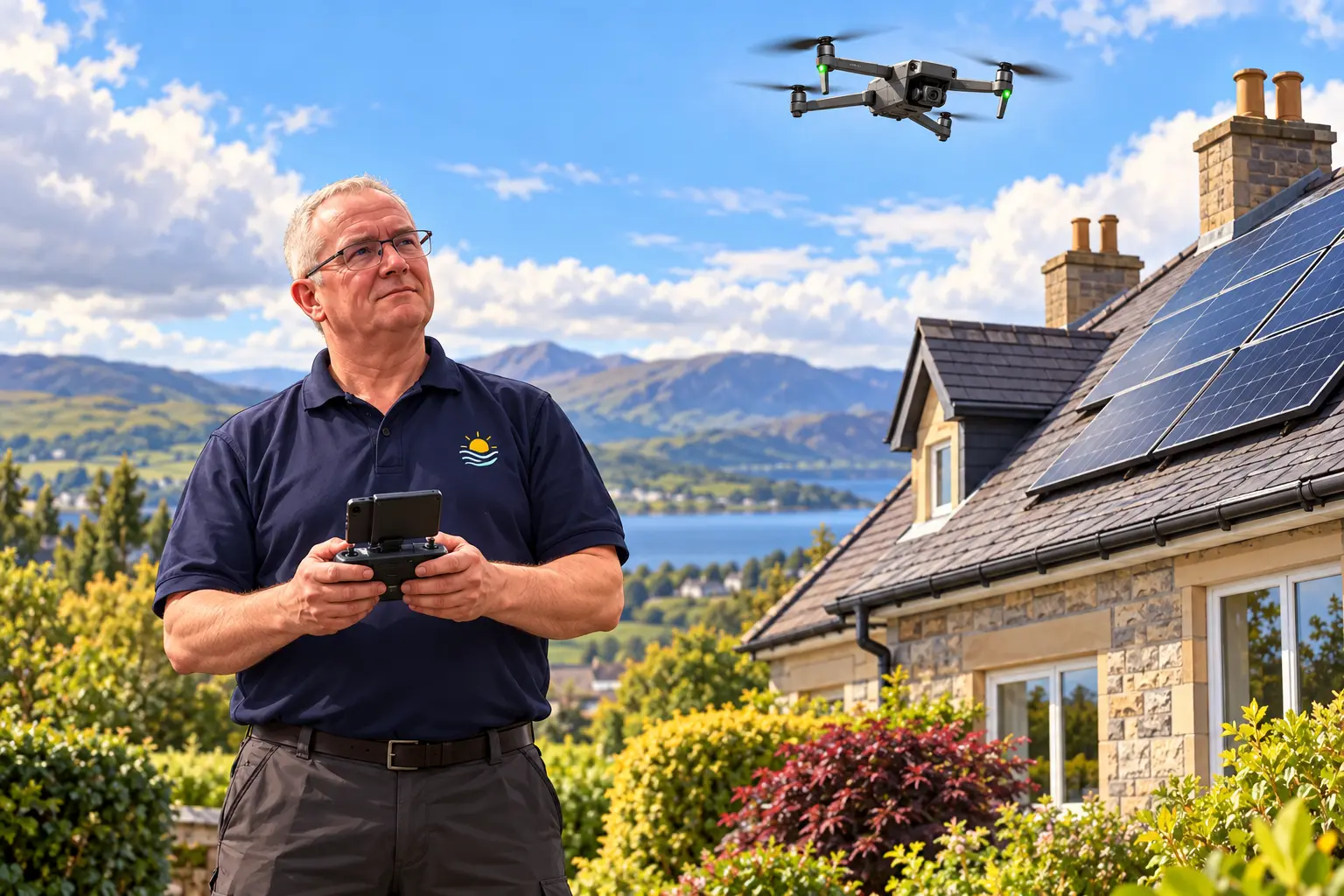
I’m Tom Kinnaird. I spend my working week visiting homes across Scotland, examining roofs, electricity supplies and the practical details that decide whether a solar proposal will work in the real world.
What experience changes
Two homes that look similar from the street can need completely different systems. Roof direction and usable space matter, but so do shading, electricity demand, the incoming supply, equipment locations, cable routes, Wi-Fi, access and what the household expects to change over the coming years.
That is why my surveys look beyond panel count. The aim is to collect enough evidence to explain what makes sense, what needs checked and what could cause trouble later.
Measurements, orientation, pitch, obstructions, shading and drone evidence establish what can genuinely be used.
Electricity consumption, an EV, a heat pump and when energy is used all influence panel, battery and inverter choices.
Metering, supply, loft access, equipment positions and cable routes can change an apparently simple design.
A homeowner should understand why a specification has been proposed—not simply be handed a list of products and a price.
What I record on site
Measured roof evidence, drone photographs, pitch, shading, obstructions, scaffold considerations and practical site access.
Meter and supply details, likely inverter and battery positions, EV charging requirements and Wi-Fi availability.
Possible cable routes, loft observations and structured information that helps designers and installers understand the property.
Clear about the relationship
I am an independent solar consultant based in Fife. Tom Solar provides practical guidance, initial roof checks and preliminary system-design advice.
If you want an installation quotation, I can help you explore suitable installers. I will identify any proposed installer and ask your permission before sharing your property and contact details. A preliminary design is subject to survey and installer confirmation. Finding your house or reading the guidance does not commit you to a purchase.
The honest answer matters
More panels are not automatically better. A bigger battery is not automatically better. A larger inverter is not automatically an upgrade.
The right answer depends on the house and how the people living there use electricity. Sometimes the evidence supports the system originally imagined. Sometimes it points towards a different design. Occasionally, the property or economics may not justify proceeding at all.
That possibility has to remain on the table if the guidance is going to be useful.
Start with your property
Use the aerial map to identify the correct Scottish property. I’ll look at the roof and decide whether a proper solar conversation is worthwhile.