
This is a useful example of an organisation investing in generating its own electricity. The early result is encouraging. For homeowners, the next step is to work out what a properly designed system could do for their own property.
What has been installed?
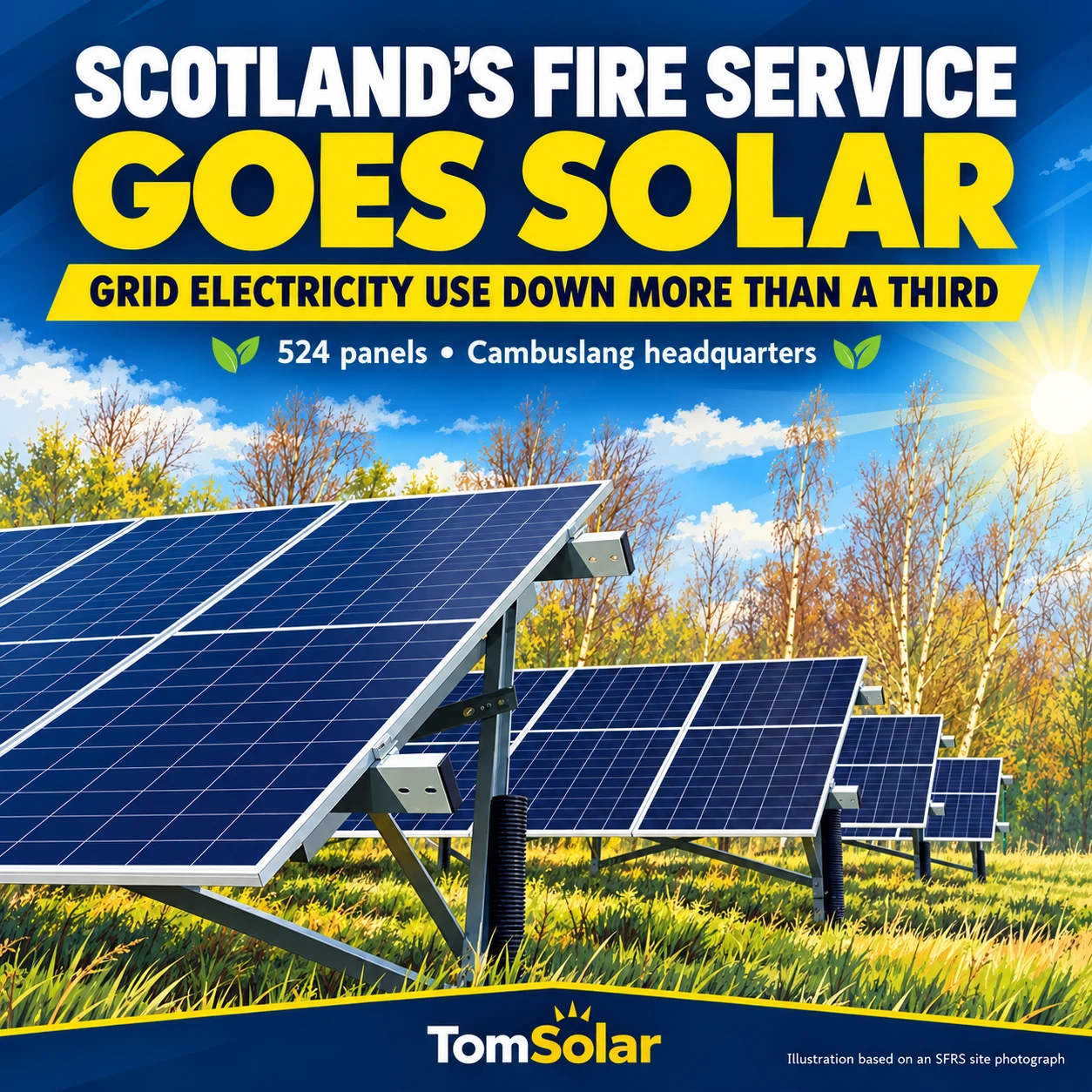
In its announcement on 30 September, SFRS says 524 panels were installed between February and April 2026 on unused land at its national headquarters in Cambuslang. The site includes offices and a firefighter training area.
The service reports that electricity drawn from the grid has fallen by more than a third compared with the same time last year. Surplus summer generation is exported.
SFRS puts the investment at £450,000, with an estimated payback of approximately eight years and an expected system life of 25 years. It anticipates annual emissions reductions exceeding 70 tonnes.
Why this matters to a household
You do not need a field of panels to benefit from producing your own electricity. The useful principle is the same: when solar generation supplies electricity you would otherwise buy, it reduces your reliance on the supplier’s unit rate.
How much that is worth depends on when you use electricity. A home with daytime demand can use some generation directly. A suitably sized battery can store some of the surplus for later, although storage introduces losses and has its own cost and service life.
The headquarters project is a commercial installation. Its budget, usage pattern and estimated payback should not be copied into a domestic quotation. The service’s announcement also does not establish a battery specification for this project.
Grid electricity use and bill savings are different
A reduction in imported electricity is a valuable result, but it does not automatically mean the total bill falls by the same percentage. Standing charges remain, and unit rates, export income and when electricity is used affect the financial outcome.
For a home, start with your annual electricity consumption in kWh, rather than just the monthly Direct Debit. Then look at the roof’s orientation and shading, expected generation, daytime use, and whether storage would help. A useful proposal should set out its assumptions and allow for maintenance and eventual equipment replacement.
Make the electricity work for you
For me, the appeal of this story is practical: solar has turned an unused space into a productive asset. A household’s roof can offer that opportunity too, provided the design and figures suit the home.
And if your system exports electricity, remember that payment needs to be arranged. Our guide to registering for solar export payments explains the steps after installation.
Source and image reference
- Scottish Fire and Rescue Service: 500 solar panels help power national headquarters, published 30 September 2026; checked 6 October 2026. Project figures above are attributed to this official announcement.
- The illustration was guided by the array photograph accompanying that announcement. It is an illustrated interpretation, not an original site photograph or an SFRS endorsement of TomSolar.
Could your roof make a difference?
Let’s look at your home, your electricity use and the options that fit. Start with a free roof check.
Check My Roof Free